OLIM Compliance Solutions Transform Compliance Management for Regulated Industries
Compliance fails most often in the space between policy and daily work. A procedure exists, a checklist is available, a spreadsheet has the right columns, yet the issue still moves slowly, the approval trail is incomplete, or the evidence is difficult to find when an auditor asks for it.
That gap is exactly where OLIM Compliance Solutions changes the model. Rather than treating compliance as a separate administrative task, OLIM brings controls, approvals, case tracking, service levels, and reporting into the flow of work. For regulated industries, this shift matters. It turns compliance from a periodic scramble into a managed, visible, and repeatable operating discipline.
Traditional tools still have a place for simple tracking. Spreadsheets can list open cases. Checklists can remind teams of required steps. Email can move approvals from one person to another. The problem is that these methods depend heavily on manual effort, memory, and constant follow-up. They also make it harder to prove what happened, when it happened, who approved it, and whether the required controls were followed.
OLIM Compliance Solutions offers a governance-first approach. It gives regulated organisations a structured way to manage cases, enforce timelines, capture decisions, and prepare for audits without building a parallel system outside daily work.

Compliance needs to move from static tracking to active control
Many compliance teams begin with spreadsheets because they are familiar, flexible, and inexpensive. Over time, that flexibility becomes a constraint. As the number of cases grows, so does the risk of missed updates, duplicate records, version confusion, and unclear ownership.
A spreadsheet can show that a case exists. It cannot reliably control how the case should move.
A checklist can confirm that a task was completed. It cannot always prove whether the right person completed it, whether the action happened within the required time, or whether an exception followed the approved process.
In regulated sectors such as banking, insurance, pharmaceuticals, healthcare, manufacturing, telecom, and financial services, these details matter. A compliance issue may involve internal policy, customer impact, regulatory reporting, operational risk, data handling, safety, or third-party obligations. Each step needs context and evidence.
OLIM addresses this by embedding compliance controls directly into daily workflows. Teams can raise, assign, review, approve, escalate, and close compliance cases within a defined structure. This reduces dependence on informal channels and keeps the process consistent even when teams, locations, or volumes change.
The result is a shift from passive record keeping to active compliance management.
Audit-ready case lifecycle management builds confidence before the audit begins
Audits become difficult when evidence is scattered. One file may sit in a shared folder. Another approval may be buried in email. A status update may exist only in a meeting note. When auditors ask for the full history of a case, the team must reconstruct the story.
Audit-ready case lifecycle management prevents that problem by capturing the story as work happens.
With OLIM, each compliance case can follow a defined lifecycle, from intake to assessment, action, approval, reporting, and closure. The system records key events and decisions, creating a traceable path that supports both internal reviews and external audits.
A strong case lifecycle usually includes:
Case creation with required information
Risk or impact classification
Assignment to the responsible team or owner
Investigation and supporting evidence
Corrective or preventive action tracking
Approval checkpoints
Closure notes and outcome records
Audit trail of changes, comments, and decisions
This structure is especially useful when compliance issues cross departments. For example, a regulatory complaint may require input from operations, legal, risk, and customer support. Without a controlled case lifecycle, teams may lose sight of handoffs or decision points. With OLIM, each stage has a clear owner and record.
The benefit is not only audit readiness. It also improves accountability. Teams know what is pending, what has been completed, and what still needs review. Leadership can see patterns across cases, such as repeated control gaps or recurring delays in a specific process.
Good compliance management is not measured only by the presence of policies. It is measured by whether those policies guide real decisions and leave reliable evidence behind.

SLA enforcement keeps compliance work from drifting
Compliance cases often involve deadlines. Some are driven by internal policy. Others relate to regulatory obligations, customer commitments, or risk thresholds. When these timelines are tracked manually, delays can go unnoticed until a case becomes urgent.
SLA enforcement is one of the most practical features within OLIM because it turns timelines into managed commitments.
A service level agreement in a compliance setting may define how quickly a case must be acknowledged, assessed, escalated, approved, or closed. OLIM can help enforce these timelines by making deadlines visible and by triggering alerts or escalations when cases approach breach points.
This matters because regulated organisations cannot depend only on individual follow-up. People are busy. Priorities shift. Teams change. Manual reminders fail.
With SLA enforcement, OLIM supports:
Time-bound ownership for every case stage
Clear due dates linked to severity or category
Escalations when work is delayed
Visibility into overdue items
Performance tracking across teams or processes
The value becomes clear in high-volume environments. A compliance team may manage hundreds or thousands of cases across branches, plants, service centres, vendors, or customer channels. Without automated SLA control, it becomes difficult to know where attention is needed most.
SLA enforcement also helps leaders distinguish between isolated delays and process-level issues. If a particular approval stage repeatedly misses deadlines, the problem may not be individual performance. It may point to unclear criteria, insufficient staffing, overlapping responsibilities, or too many manual steps.
OLIM makes those patterns easier to identify because the timeline is part of the workflow rather than an after-the-fact calculation.
Regulatory reporting becomes less dependent on manual compilation
Regulatory reporting is one of the most demanding areas of compliance management. Reports must be accurate, timely, complete, and supported by underlying records. When reporting data sits across spreadsheets, emails, and local files, teams spend significant time collecting and reconciling information.
This increases risk. Manual compilation can introduce errors. Late updates can change numbers after a report is prepared. Different teams may use different definitions for the same case type or status.
OLIM helps by bringing case data, status, approvals, and outcomes into a common system. This gives compliance teams a more reliable base for reporting. Instead of chasing updates close to the submission date, they can draw from records created during the normal course of work.
Regulated organisations often need reporting across areas such as:
Open and closed compliance cases
Breaches and incidents
Corrective actions
Pending approvals
SLA performance
Escalations and exceptions
Case ageing
Regulatory complaints or obligations
A governance-first platform does more than store this information. It standardises the way data is captured. That means reporting is not just faster, it is more consistent.
For industries in India, this is especially relevant where organisations may report to or align with authorities such as RBI, SEBI, IRDAI, sector regulators, or internal governance committees. Requirements vary by industry and context, but the need for reliable records remains constant.
OLIM does not remove the need for compliance judgment. Teams still need to interpret obligations, validate findings, and ensure that reports meet applicable requirements. This article is informational and should not be treated as legal or regulatory advice. What OLIM improves is the quality and availability of the operational data behind those decisions.
Approvals and controlled processes reduce informal risk
Many compliance failures are not caused by the absence of approvals. They happen because approvals occur outside a controlled process.
An email approval may be valid in context, but it can be hard to locate later. A verbal approval may allow work to continue, but it may not provide enough evidence. A shared document may contain comments, but it may not show the final authority clearly.
OLIM addresses this by placing approvals inside defined workflows. The right approver can be assigned based on case type, severity, department, location, or risk level. The approval step becomes part of the case history, not a separate trail that must be collected later.
Controlled processes help answer questions that often arise during reviews:
Who approved the action?
What information did they review before approval?
Was the approval given at the correct stage?
Were exceptions recorded?
Did the case follow the required path?
Were changes made after approval?
This level of control is useful for regulated industries because it supports consistency. Teams do not need to rely on personal habits or local interpretations. The process guides them through the required path.
It also reduces the risk of bypassing controls under pressure. When a deadline is close or a high-impact issue arises, teams may be tempted to take shortcuts. OLIM makes the correct process easier to follow and easier to prove.
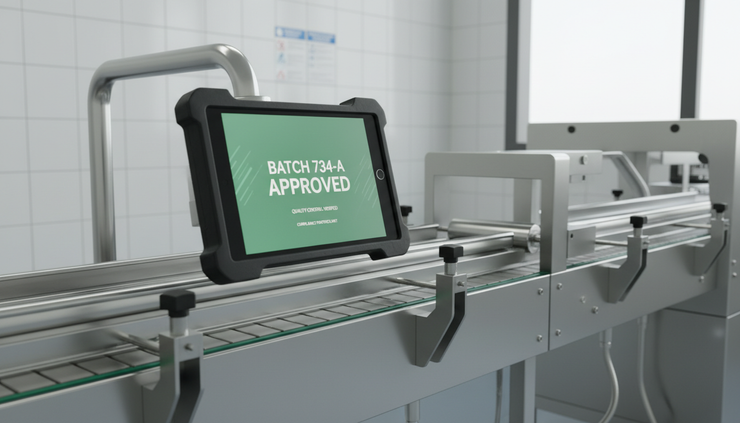
OLIM brings compliance into daily workflows
The strongest compliance systems do not sit apart from work. They are built into the way work is assigned, reviewed, approved, and measured. OLIM follows this principle by connecting compliance tasks with operational activity.
This is the key difference between OLIM and traditional tracking methods.
Traditional spreadsheets and checklists
Data must be updated manually
Ownership can become unclear
Approvals may sit in email or messages
SLA breaches may be spotted late
Reporting depends on manual consolidation
Audit preparation often requires reconstruction
OLIM governance-first workflows
Case progress is recorded as work moves forward
Each stage has a defined owner
Approvals are captured within the case record
Timelines and escalations are visible during the process
Reports draw from structured case data
Evidence is built through the case lifecycle
This change has a practical impact on daily behaviour. A branch team can raise a case using defined categories. A compliance reviewer can assess it within the same record. A risk owner can add evidence. An approver can review the case history before signing off. Leadership can monitor trends without waiting for manual status updates.
The process becomes easier to manage because the platform carries the governance requirements with it.
This is where OLIM Compliance Solutions Transform Compliance Management for Regulated Industries in a meaningful way. The value is not limited to digitising a form. It comes from making governance part of the operating rhythm.
Regulated industries gain better visibility and stronger governance
Regulated industries face a common challenge. They must move quickly enough to serve customers, patients, policyholders, account holders, vendors, and internal teams, while still maintaining control. Growth, decentralised operations, outsourcing, and changing rules can make this harder.
OLIM supports these organisations by improving visibility across the compliance function. Leaders can see open issues, blocked cases, ageing items, repeated breaches, pending approvals, and reporting gaps. That visibility helps compliance teams move from reactive follow-up to planned management.
The benefits can include:
Fewer missed deadlines
Better evidence quality
Clearer ownership
More consistent approvals
Faster audit preparation
Stronger reporting discipline
Reduced dependence on informal tracking
Better insight into recurring control weaknesses
These benefits matter most when compliance volume is high or when the cost of a missed control is significant. In a single-location business with limited regulation, a simple tracker may be enough. In a regulated enterprise with multiple teams and reporting lines, the need for a structured platform becomes much stronger.
A governance-first platform also supports cultural change. When employees see that compliance steps are embedded into work rather than added as a last-minute burden, they are more likely to follow the process. Over time, this builds a stronger control environment.
A governance-first platform changes the role of compliance teams
Compliance teams are often pulled into manual chasing. They ask for updates, remind teams about deadlines, search for evidence, reconcile reports, and confirm approvals. This work is necessary, but it can consume time that could be spent on analysis, prevention, and advisory support.
By managing workflow, evidence, SLAs, and reporting in one structured environment, OLIM helps compliance teams focus on higher-value work. They can identify recurring issues, improve policy design, strengthen controls, and support business teams before problems grow.
This does not mean automation replaces expertise. Compliance still requires judgment, interpretation, and accountability. OLIM supports that expertise by giving teams cleaner records, clearer process paths, and better visibility into what is happening across the organisation.
The platform’s governance-first position is important. It signals that compliance management is not only about closing cases faster. It is about ensuring that every case follows the right process, carries the right evidence, and supports the organisation’s obligations.

The takeaway is clear
Regulated industries need more than spreadsheets, checklists, and email trails to manage modern compliance demands. These tools can record activity, but they struggle to control ownership, deadlines, approvals, evidence, and reporting at scale.
OLIM changes that by placing compliance inside daily workflows. Its audit-ready case lifecycle management, SLA enforcement, regulatory reporting support, and controlled approval processes help organisations manage obligations with greater consistency and confidence.
The real value lies in the governance-first model. Compliance becomes part of how work gets done, not a separate burden that appears during audits or reporting cycles. For regulated organisations, that shift can mean fewer surprises, stronger accountability, and a more reliable way to prove that the right steps were followed.


Comments