How OLIM Vendor Suite Transforms Vendor Management in Manufacturing
A production line can stop because of a missing bearing, a delayed resin shipment, an expired vendor certificate, or a transporter who did not update dispatch status on time. In manufacturing, vendor management is never just a purchase function. It touches production planning, quality, compliance, inventory, finance, and customer commitments.
That is why vendor management in manufacturing needs more than phone calls, spreadsheets, email trails, and disconnected approvals. It needs a clear system that can bring order to a wide network of suppliers and service partners.
OLIM Vendor Suite helps manufacturers build that order. It gives teams a structured way to manage vendors, track performance, reduce risk, and make better decisions across the vendor lifecycle.

Manufacturing depends on a wider vendor network than most systems can handle
A manufacturing business rarely works with one type of vendor. It depends on a connected chain of partners, each with a different role, risk profile, and set of expectations.
Common vendor categories include:
Raw-material suppliers Providers of steel, polymers, chemicals, textiles, rubber, food ingredients, electronic components, or packaging-grade paper.
Component and sub-assembly suppliers Vendors that provide castings, machined parts, printed circuit boards, fasteners, motors, valves, moulded parts, and other production inputs.
Packaging vendors Suppliers of cartons, labels, drums, containers, pallets, wrappers, and export-ready packaging.
Logistics providers Transporters, freight forwarders, warehousing partners, last-mile dispatch teams, and port or customs support providers.
Maintenance and engineering service vendors Partners who support machine repairs, calibration, tooling, fabrication, electrical work, HVAC services, and plant utilities.
Compliance and testing partners Labs, auditors, inspection agencies, certification bodies, and environmental or safety consultants.
Indirect procurement vendors Suppliers of consumables, safety equipment, uniforms, IT assets, facility services, and office supplies.
Each vendor group carries a different kind of dependency. A raw-material delay may affect the entire production plan. A packaging error may hold back finished goods. A missing calibration certificate may affect quality audits. A transporter delay may lead to missed delivery slots at a customer’s warehouse.
The difficulty grows when vendor data sits in different places. Procurement may maintain one list. Finance may have another vendor master. Quality may keep inspection records separately. Plant teams may store service reports in folders or local drives. Logistics teams may track transporters on calls and messages.
This creates a vendor ecosystem that works, but only with constant manual effort.
Disjointed vendor processes create hidden operational risk
Many manufacturers improve machines, production layouts, and inventory planning, but vendor processes often remain fragmented. That gap creates risk that is hard to see until something goes wrong.
Poor visibility leads to late decisions
When teams cannot see vendor status in one place, they act late.
For example, a packaging vendor may be struggling with repeated print errors. Quality may know about it through rejection notes. Procurement may know through replacement requests. Production may only feel the impact when finished goods cannot be packed for dispatch.
If these signals stay separate, the issue looks smaller than it really is. A connected system can show that quality rejections, delivery delays, and urgent purchase orders are linked to the same vendor.
Manual follow-ups slow down production response
Email and phone-based follow-ups may work for a small vendor base. They become unreliable when a plant handles hundreds of vendors across multiple sites.
A purchase team may ask for updated compliance documents. The vendor sends them to the buyer. The buyer forwards them to quality. Quality forwards comments to procurement. The revised document then gets buried in a thread.
This kind of process creates delay, duplication, and confusion over which version is final.
Compliance gaps can surface during audits
Manufacturing vendors often need valid documents, certifications, and declarations. These may include tax registration details, quality certifications, safety records, environmental clearances, test reports, insurance documents, or statutory declarations.
When document tracking is manual, expiry dates get missed. A vendor may continue supplying even after a required certificate has lapsed. The issue may appear only during an audit, customer review, or regulatory inspection.
Vendor performance becomes opinion-based
Without consistent data, vendor evaluation becomes subjective. One buyer may rate a supplier as reliable because they respond quickly. A production planner may see the same supplier as risky because deliveries often arrive late. Finance may have another view because invoice disputes are frequent.
All three views may be valid. The problem is that they do not come together in a structured score.

OLIM Vendor Suite brings structure to the vendor lifecycle
OLIM Vendor Suite addresses these challenges by giving manufacturers a more connected way to manage the vendor lifecycle, from onboarding to performance review.
Instead of treating vendors as static entries in a master list, it helps teams manage vendors as active partners with documents, risks, approvals, transactions, and service records attached to them.
Vendor onboarding becomes controlled and repeatable
Vendor onboarding sets the tone for the relationship. If the approval process is weak, the business may bring in vendors without proper checks. If it is too slow, production teams may struggle to qualify alternates during urgent demand.
OLIM Vendor Suite supports a more structured onboarding process by helping teams capture required vendor details, route approvals, collect documents, and maintain a clear record of decisions.
For example, a manufacturer adding a second-source supplier for a critical casting can define the information needed before approval. This may include company details, plant capacity, quality certificates, sample approval status, commercial terms, and risk checks. Each stakeholder can review the part relevant to them, rather than relying on scattered email exchanges.
The result is a cleaner vendor base and better traceability.
Vendor master data becomes more reliable
A vendor master is only useful if it is accurate. Duplicate vendor records, outdated bank details, missing tax information, and inconsistent naming can create payment errors, compliance concerns, and reporting gaps.
A structured vendor suite helps maintain cleaner records by creating defined fields, approval controls, status tracking, and ownership. This matters in manufacturing because the same vendor may supply to more than one plant, handle more than one category, or operate under different contractual arrangements.
When vendor master data is reliable, teams can answer basic questions faster:
Which approved vendors supply this material?
Which vendors are active, inactive, blocked, or under review?
Which vendors are approved for a specific plant or product category?
Which documents are pending or expired?
Which vendors have open quality or delivery issues?
These answers help procurement and plant teams act before a problem reaches the production floor.
Document and compliance tracking becomes proactive
Manufacturers cannot afford to chase critical documents only during audits. OLIM Vendor Suite helps teams organise vendor documentation and monitor expiry or renewal needs.
A practical example is a chemical manufacturer that works with transporters carrying hazardous materials. The business may need to track licences, driver documentation, vehicle fitness, insurance, safety training records, and emergency handling declarations. If these documents are monitored in a connected system, the logistics and compliance teams can spot gaps before dispatch is affected.
This reduces last-minute escalations and gives audit teams a clearer trail.
Visibility turns vendor data into operational control
Visibility is one of the biggest gains of a connected vendor ecosystem. It changes vendor management from a reactive activity into a managed process.
Teams can see performance across delivery, quality, and service
A vendor may look good on price but poor on delivery. Another may deliver on time but produce frequent quality rejections. A third may perform well for one plant but poorly for another.
OLIM Vendor Suite helps manufacturers bring these signals together. Vendor performance can be viewed through practical measures such as:
Performance area | What manufacturers need to track |
Delivery | On-time supply, partial deliveries, lead time adherence, urgent order response |
Quality | Rejections, inspection failures, defect patterns, corrective action status |
Commercial | Price consistency, invoice accuracy, credit terms, dispute frequency |
Compliance | Document validity, audit status, certification records |
Responsiveness | Query closure time, issue acknowledgement, corrective action follow-up |
This kind of visibility supports better sourcing decisions. It also helps procurement speak with vendors using facts, not assumptions.
Risk becomes easier to detect early
Vendor risk is not limited to financial instability. In manufacturing, risk can come from capacity constraints, single-source dependency, location issues, quality drift, repeated delays, compliance gaps, or weak communication.
A connected suite helps teams identify early warning signs. For example, if a raw-material supplier begins missing committed dispatch dates for three consecutive cycles, the system can help flag the pattern. Procurement can then check whether the issue is seasonal demand, plant capacity, transport availability, or commercial disagreement.
That early view gives the manufacturer time to activate an alternate vendor, adjust production plans, or increase safety stock for critical inputs.

Intelligence helps manufacturers improve vendor decisions
Structure and visibility solve many day-to-day problems. Intelligence helps manufacturers make better long-term decisions.
In this context, intelligence means the ability to connect data points and turn them into useful guidance. It helps teams move from asking “What happened?” to asking “What should we do next?”
Better vendor segmentation
Not every vendor needs the same level of control. A supplier of a critical imported component needs closer monitoring than a local stationery vendor. A transporter handling customer-critical dispatches needs different oversight than a one-time repair service provider.
OLIM Vendor Suite helps manufacturers segment vendors based on business impact, category, risk, location, performance, and compliance status. This makes monitoring more practical.
A simple approach may classify vendors as:
Critical production vendors
Approved alternate vendors
Service and maintenance vendors
High-compliance vendors
Low-risk indirect vendors
Vendors under review
Once vendors are segmented, teams can set different review cycles, documentation needs, and escalation paths.
Stronger negotiation and supplier development
Good vendor management is not only about control. It also supports better partnerships.
When manufacturers track performance consistently, they can work with vendors to improve. A supplier with strong quality but weak delivery performance may need better forecasting or schedule visibility. A transporter with recurring delay patterns may need route planning support or clearer loading windows. A component supplier with repeated defects may need process feedback and corrective action tracking.
This leads to more productive vendor reviews. Instead of broad complaints, teams can discuss specific patterns:
Which part numbers show repeated defects?
Which routes face the most transport delays?
Which document gaps occur before audits?
Which vendors respond fastest to corrective actions?
Which suppliers perform best during demand spikes?
These discussions are more useful for both sides.
Faster response during disruption
Manufacturing disruptions are not rare. Floods, port congestion, labour shortages, fuel price changes, raw-material shortages, and sudden demand swings can affect supply.
A connected vendor system improves response because teams know the vendor base better. They can identify alternate suppliers, check approval status, review past performance, and understand risk faster.
Consider an auto component manufacturer supplying to multiple OEM customers. If one electronics supplier faces a production delay, the procurement team needs to know approved alternates immediately. It also needs to check whether the alternate has supplied before, what quality issues were recorded, which plant approved them, and whether pricing is current.
When this information is in one connected suite, the response is faster and more controlled.
Real-world examples show the value of a connected vendor ecosystem
The benefits of OLIM Vendor Suite become clearer when viewed through everyday manufacturing situations.
A food manufacturer reduces audit stress
A food processing company works with ingredient suppliers, packaging vendors, pest-control partners, cold-chain transporters, and testing labs. Each vendor category carries documentation needs.
Before using a connected vendor system, the team may depend on spreadsheets for certificate expiry dates and folders for audit records. During customer audits, employees spend hours collecting documents from different teams.
With a structured vendor suite, vendor records, certificates, expiry dates, and approval status can be organised in one place. The team can prepare for audits with less manual searching. It can also follow up on expiring documents before they become urgent.
An engineering plant improves alternate supplier readiness
A heavy engineering manufacturer may depend on a small number of suppliers for machined parts. If one supplier faces capacity constraints, production can suffer.
With OLIM Vendor Suite, the procurement team can maintain approved alternates, track sample approval history, store quality outcomes, and compare vendor performance across plants. When demand rises, the business can shift part of the load to a qualified alternate with more confidence.
This does not remove risk completely, but it reduces the time lost in finding and validating information.
A consumer goods company gains control over logistics vendors
A consumer goods manufacturer may work with multiple transporters across states. Some handle full-truck loads. Some manage regional distribution. Some support seasonal peaks.
If dispatch status, vehicle reporting, invoice disputes, and damage claims are tracked separately, logistics performance becomes hard to judge. A connected vendor suite can help bring transporter performance into a common view. The business can then identify which partners perform well by lane, region, season, and product type.
This helps logistics teams choose the right vendor for the right movement.
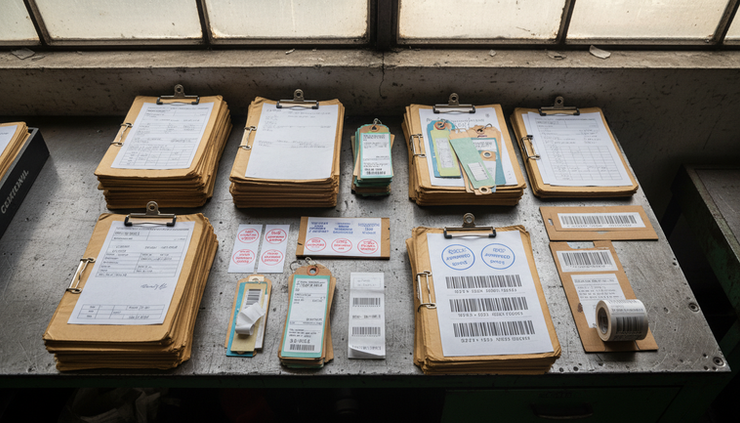
What changes when vendor management becomes connected
When manufacturers connect vendor information, the change is felt across departments.
Procurement gains better control over onboarding, approvals, and supplier performance. Quality teams can link vendor history to inspections and corrective actions. Finance teams benefit from cleaner vendor records and fewer master-data issues. Compliance teams get better document tracking. Plant teams get faster answers when supply issues arise.
The larger gain is cultural. Vendor management stops being a scattered support process and becomes part of operational planning.
A connected vendor ecosystem helps manufacturers:
Reduce dependency on individual memory and informal follow-ups
Improve trust in vendor master data
Identify risk before it becomes a plant-level issue
Compare vendor performance across categories and locations
Support audits with cleaner documentation
Build stronger supplier relationships through fact-based reviews
Respond faster to supply disruption
This is especially relevant for manufacturers operating across India, where supplier networks often span multiple states, languages, transport routes, and compliance requirements. A central structure helps keep local execution aligned with company-wide standards.
The takeaway for manufacturers
Vendor management directly affects production continuity, product quality, customer delivery, and compliance. When vendor processes are split across spreadsheets, emails, local files, and separate systems, manufacturers carry hidden risk.
OLIM Vendor Suite brings structure, visibility, and intelligence to this process. It helps manufacturers manage vendors as part of a connected ecosystem, not as isolated records. That means better onboarding, cleaner documents, clearer performance tracking, earlier risk detection, and stronger supplier collaboration.
For manufacturers, the real value is simple: fewer surprises from the vendor base and more confidence in every supply decision.



Comments